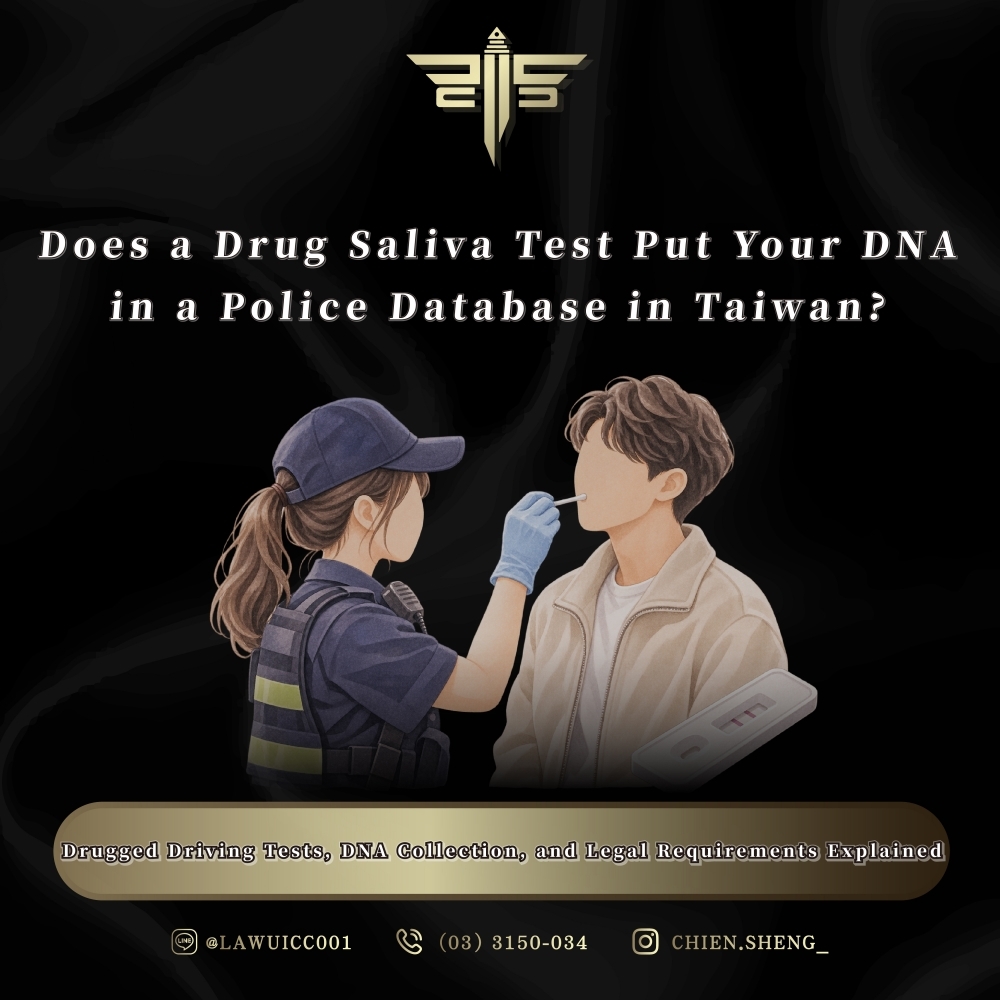
Does a Drug Saliva Test Put Your DNA in a Police Database in Taiwan? Drugged Driving Tests, DNA Collection, and Legal Requirements Explained
商品圖像
-
商品資訊
Table of contents
- 1. What Does a Drug Saliva Test Detect?
- 2. Three Different Types of Saliva and DNA Collection
- 3. When Can Police Compulsorily Collect DNA?
- 4. Legal Procedures for DNA Sampling
- 5. DNA Retention and Deletion Rights
- 6. What Happens After a Positive Drug Saliva Test?
- 7. Frequently Asked Questions About Drug Saliva Tests and DNA Databases in Taiwan
- 8. Conclusion: Drug Saliva Screening and DNA Database Registration Are Different Legal Procedures
If you undergo a roadside drug saliva test in Taiwan, you may wonder whether police can use your saliva to obtain your DNA profile and store it in a criminal database.
The answer is no, not automatically.
A drug saliva screening test does not, by itself, mean that police have conducted DNA profiling or registered your genetic information in a DNA database.
Although saliva may contain human cells and DNA, drug screening, criminal evidence collection, and formal DNA database sampling are separate procedures with different legal purposes and requirements.
※ This article explains the differences, when compulsory DNA collection may be permitted in drug-related cases, and whether DNA records can be deleted.
1. What Does a Drug Saliva Test Detect?
1. Drug Screening Is Not DNA Profiling
A drug saliva test is designed to screen for the presence of certain drugs or drug-related substances in oral fluid.
In Taiwan, roadside saliva screening is used as an enforcement tool in suspected drugged driving cases.
➡︎ Its purpose is to identify potential drug exposure, not to analyze a person's genetic characteristics.DNA profiling requires separate laboratory procedures, including sample processing, DNA extraction, and genetic profile analysis.
2. Does Saliva Contain DNA?
Yes. Saliva may contain human cells carrying DNA.
However, the presence of DNA in a saliva sample does not mean that police have analyzed or stored a person's DNA profile.
A positive or negative result from a drug screening device does not establish that DNA profiling has occurred.Nor does it automatically indicate that the person's genetic information has been entered into a police database.
2. Three Different Types of Saliva and DNA Collection
1. Roadside Drug Saliva Screening
The first procedure is a roadside saliva screening test used to detect possible drug reactions.
➠ This is a preliminary drug test, not a DNA identification procedure.
2. Saliva Collection During a Criminal Investigation
Article 205-2 of Taiwan's Code of Criminal Procedure permits specified investigative authorities, under statutory conditions, to collect saliva from a suspect or defendant who has been arrested or brought into custody where there are sufficient grounds to believe the sample may serve as criminal evidence.
➠ This procedure concerns evidence collection during a criminal investigation.It does not automatically mean that every saliva sample will undergo DNA profiling or be entered into a DNA database.
3. Formal DNA Sampling for a Criminal Database
The third procedure involves DNA sampling under Taiwan's DNA Sampling Act (Deoxyribonucleic Acid Sampling Act).
➠ This requires compliance with statutory conditions concerning eligible individuals, covered offenses, sampling procedures, laboratory processing, and record management.
Police possession of a saliva sample alone does not establish that formal DNA database sampling has taken place.
3. When Can Police Compulsorily Collect DNA?
1. Drug Offenses Do Not Automatically Require DNA Collection
Under Taiwan's DNA Sampling Act, compulsory DNA sampling is limited to specified criminal offenses and statutory circumstances.
A person is not automatically subject to DNA collection simply because they were stopped by police, received a positive drug saliva screening result, or became involved in a drug case for the first time.
2. Repeat Drug Offenses and DNA Sampling Requirements
The Act identifies certain repeat-offense circumstances involving Articles 4 through 8, Article 10, and Article 12 of the Narcotics Hazard Prevention Act.
➠ In general, the relevant provisions may apply where a person has previously received a final conviction for a qualifying offense and subsequently commits another offense covered by the statutory requirements.
Whether compulsory DNA sampling is legally permitted depends on the precise charges, the earlier criminal judgment, and the circumstances of the new case.
The mere description of a case as a "drug offense" is insufficient to determine eligibility for compulsory sampling.
3. Other Criminal Offenses May Also Qualify
The DNA Sampling Act also addresses other categories of criminal conduct, including certain sexual offenses and serious violent crimes.
➠ If a case involves additional charges, the legal basis for DNA sampling may differ.
Therefore, the legality of compulsory DNA collection must be evaluated according to all relevant charges and statutory requirements, not solely the result of a drug saliva test.
4. Legal Procedures for DNA Sampling
1. Official Notice and Sampling Documentation
When compulsory DNA sampling is conducted under the DNA Sampling Act, the responsible authorities must follow the applicable notification and sampling procedures.
Judicial police authorities, prosecutors, and courts have different procedural responsibilities depending on the circumstances.
After sampling, the collected material must be transferred to the designated authority for processing, and the person sampled must receive the required documentation.
2. Identity Verification and DNA Sampling Certificates
Taiwan's DNA Sample Collection Regulations require authorities to verify the identity of the person being sampled and check whether relevant DNA records already exist.A DNA sampling certificate must also be prepared following the procedure.
Taiwan's Criminal Investigation Bureau provides official forms relating to DNA sampling notices, sampling certificates, and applications for deletion of DNA samples and records.
➠ If police indicate that a separate DNA sample will be collected, individuals may ask about the legal basis, purpose, and required documentation.Before signing any document, carefully review its title, contents, and stated purpose.
5. DNA Retention and Deletion Rights
1. How Long Are DNA Samples and Records Stored?
Taiwan's DNA Sampling Act establishes rules governing the retention and management of DNA samples and related records.
➠ The applicable requirements depend on the legal basis for collection and the circumstances of the case.DNA samples and DNA records are not necessarily subject to identical handling rules.
2. Can DNA Records Be Deleted After Non-Prosecution or Acquittal?
Under the Act, individuals sampled pursuant to Article 5 may qualify for deletion of their DNA samples and records if they receive a non-prosecution disposition or a final acquittal.
The competent authority is required to delete qualifying records, and the individual may also submit a deletion application.
However, deletion may be unavailable where another case independently provides a lawful basis for compulsory DNA sampling.
Individuals who previously underwent formal DNA sampling and later received non-prosecution or acquittal should review their eligibility and the relevant application procedure.
6. What Happens After a Positive Drug Saliva Test?
1. A Positive Drug Test Is Not a DNA Database Entry
■ A positive drug saliva screening result and a DNA profile are entirely different types of information.
■ A positive screening result does not automatically establish that DNA was collected, analyzed, or registered in a database.
It also does not mean that a court has found the individual guilty of a drug-related offense.
2. Confirm the Purpose of Each Sample
If a drugged driving or drug-related case proceeds to criminal investigation, it is important to determine whether police collected:
■ A saliva sample for preliminary drug screening.
■ A biological sample for further drug testing or forensic examination.
■ A separate sample for formal DNA identification under the DNA Sampling Act.
These procedures have different purposes and legal requirements.Individuals should preserve relevant police notices, sampling certificates, screening results, and interview records.
Where the purpose of collection or subsequent use of a sample is unclear, legal counsel may review the relevant documents and investigative procedures.
7. Frequently Asked Questions About Drug Saliva Tests and DNA Databases in Taiwan
Q1: Does a drug saliva test automatically put my DNA in a police database?
No. A roadside drug saliva screening test does not automatically involve DNA profiling or registration in a criminal DNA database.
Q2: Can police obtain DNA from saliva?
Saliva may contain DNA, but extracting and analyzing a DNA profile requires separate forensic procedures.
Q3: Will a positive drug saliva test lead to compulsory DNA sampling?
Not automatically. Compulsory DNA sampling requires an independent statutory basis under Taiwan's DNA Sampling Act.
Q4: Can first-time drug offenders be required to provide DNA?
A first drug offense alone does not automatically satisfy the repeat-offense sampling conditions. However, other qualifying charges or circumstances may provide a separate legal basis.
Q5: What documents should I receive during formal DNA sampling?
Applicable procedures may involve official sampling notices, identity verification, and a DNA sampling certificate.
Q6: Can I request deletion of my DNA records after being found not guilty?
Potentially, yes. Under the statutory conditions, individuals who receive a final acquittal or non-prosecution disposition may qualify for deletion of DNA samples and records.
Q7: Does a positive drug saliva screening result mean I have been convicted of drugged driving?
No. A screening result is not a criminal conviction. Any criminal liability must be established through the applicable legal process and evidence.
8. Conclusion: Drug Saliva Screening and DNA Database Registration Are Different Legal Procedures
A drug saliva screening test in Taiwan does not automatically authorize police to or register a person's DNA profile in a criminal database.
Although saliva may contain DNA, drug screening and forensic DNA identification serve different purposes and are governed by different legal requirements.
Compulsory DNA sampling depends on the relevant offense, prior criminal history where applicable, and the statutory conditions of the DNA Sampling Act.
➡︎ Individuals who receive formal DNA sampling notices or have concerns about the collection, use, retention, or deletion of biological samples should review the relevant documents and seek legal advice where necessary.
 Chien Sheng International Law Firm handles criminal defense matters and may assist clients in examining investigative procedures, the purpose of biological sample collection, and applicable procedural rights.
※ This article provides general legal information about Taiwan's drug screening and DNA sampling procedures. It does not replace individualized legal advice. The legality of sampling and the handling of DNA records depend on the specific facts and applicable law.
This reduces both medical risks and potential legal exposure.
Chien Sheng International Law Firm

LINE Online Legal Consultation: @lawuicc001 (Click to consult)
Welcome to call to schedule a meeting: 03-3150-034
Multiple payment methods available: Cash, Credit Card, Bank Transfer
Facebook: Chien Sheng International Law Firm
Instagram: chien.sheng_
-
商品Q&A