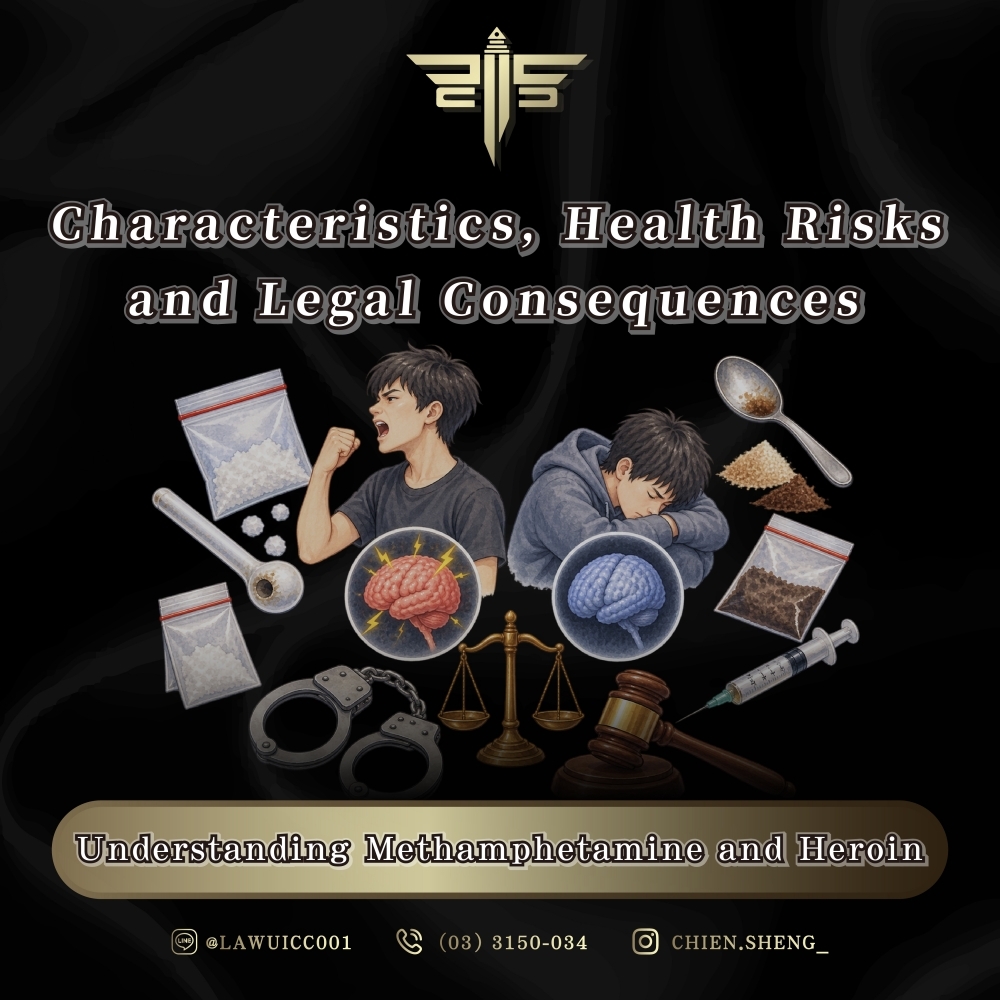
Understanding Methamphetamine and Heroin: Characteristics, Health Risks, and Legal Consequences
商品圖像
-
商品資訊
目錄
Drug-related offenses remain a serious issue in Taiwan. Many people are unfamiliar with the appearance of controlled drugs, their effects on the body, and the warning signs associated with drug use. This lack of awareness may increase the risk of accidental exposure or make it difficult to recognize possible drug use among family members or friends.
Chien Sheng International Law Firm is committed to providing legal education on the risks of illegal drugs and the legal options available to individuals facing drug-related investigations.
This article introduces two commonly encountered drugs in Taiwan: methamphetamine, sometimes referred to colloquially as the “hard” drug, and heroin, sometimes referred to as the “soft” drug. We explain their appearance, effects, health risks, warning signs, and potential criminal consequences under Taiwan law.
1. Drug Classification and Physical Appearance
Two commonly encountered controlled drugs in Taiwan are:
■ Methamphetamine — Category 2 narcotic
■ Heroin — Category 1 narcotic
These substances differ significantly in appearance, methods of use, physiological effects, and legal consequences.
Methamphetamine
Physical Appearance
Methamphetamine commonly appears in transparent or semi-transparent crystalline form and may resemble rock sugar or ice crystals.
In some Southeast Asian countries, methamphetamine may also appear in tablet form and be sold under various street names.
Methods of Use
Methamphetamine may be consumed in different ways depending on its form.
One common method involves heating the substance and inhaling the resulting vapor or smoke.
Physical and Behavioral Effects
Methamphetamine is a central nervous system stimulant.
After use, a person may experience:
1. Intense stimulation: Themay become unusually energetic, talkative, and physically active.
2. Insomnia: Methamphetamine can seriously disrupt sleep. Some users may remain awake for extended periods despite physical exhaustion.
3. Dilated pupils: The pupils may become noticeably enlarged, and the person’s gaze may appear unusually intense.
4. Hyperfocus and repetitive behavior: Users may become extremely focused on a particular activity or topic and may repeat the same behavior for long periods.
5. Other physical effects: These may include rapid heartbeat, elevated blood pressure, increased sweating, reduced appetite, dry mouth, and long-term dental damage.
2. Health Risks of Methamphetamine
Long-term methamphetamine use may cause serious damage to the cardiovascular and nervous systems.
Potential consequences include:
■ heart disease;
■ stroke;
■ high blood pressure;
■ anxiety;
■ paranoia;
■ psychotic symptoms;
■ severe dental decay;
■ gum damage;
■ skin sores and infections.
Over time, prolonged drug dependence may also result in deterioration of social functioning, unemployment, family conflict, and social isolation.
Heroin
Physical Appearance
Heroin commonly appears as a powder ranging in color from white to brown.
Its powdered texture contrasts with the crystalline appearance commonly associated with methamphetamine.
Methods of Use
Heroin may be consumed in several ways.
It may be heated and inhaled, or dissolved and injected into a vein.
Injection carries particularly serious risks because of the rapid onset of effects and the increased risk of overdose and blood-borne infections.
3. Physical Effects After Heroin Use
Heroin is a central nervous system depressant.
Its effects are therefore very different from the stimulating effects of methamphetamine.
1. Sedative and Anesthetic Effects
Users may feel heavily sedated, physically numb, or slow to react.
2. Drowsiness and Reduced Awareness
A person may appear unfocused, sleepy, confused, or unusually slow in responding to the surrounding environment.
3. Cognitive Decline with Long-Term Use
Long-term heroin dependence may be associated with impaired memory, reduced judgment, and deterioration in cognitive and social functioning.
4. Other Physical Effect s
Other possible signs include:
■ constricted or “pinpoint” pupils;
■ slowed breathing;
■ low blood pressure;
■ reduced heart rate;
■ muscle relaxation;
■ pale or bluish skin;
■ nausea and vomiting.
4. Health Risks of Heroin
Long-term heroin use can cause severe damage to multiple organ systems.
Respiratory complications may include respiratory depression, respiratory failure, and pneumonia.
Cardiovascular complications may include heart problems and vascular inflammation.
People who inject heroin also face increased risks of blood-borne infectious diseases, including HIV and hepatitis, particularly when needles or other injection equipment are shared.
Heroin may also cause neurological damage and carries an extremely high risk of dependence and overdose.
As dependence worsens, users may experience severe deterioration in employment, family relationships, and overall social functioning.
Signs That May Be Associated with Methamphetamine Use
If you suspect that someone may be using methamphetamine, possible warning signs may include:
1. Dilated pupils: The eyes may appear unusually wide or intense.
2. Severe insomnia: The person may remain awake for unusually long periods while still appearing highly stimulated.
3. Increased or rapid speech: The person may become unusually talkative or speak quickly.
4. Restlessness and increased activity: The person may have difficulty sitting still and may move constantly.
5. Repetitive or obsessive behavior: The person may become unusually fixated on a specific task or subject.
Additional signs may include reduced appetite, weight loss, dental problems, skin sores, and repeated infections.
These signs alone do not prove drug use, and medical or professional assessment may be necessary.
5. Signs of Heroin Use
Possible warning signs associated with heroin use include:
1. Pinpoint pupils: The pupils may become unusually small.
2. Drowsiness or mental clouding: The person may appear sedated, unfocused, or slow to respond.
3. Slowed movement: Physical reactions and movements may become noticeably slower.
4. Cognitive decline: Long-term users may experience memory problems, impaired judgment, and difficulty functioning normally.
5. Pale or bluish skin: Changes in skin color may occur, particularly when breathing is affected.
6. Injection marks: People who inject heroin may have visible needle marks on the arms, legs, or other parts of the body.
7. Frequent nausea or vomiting: Repeated vomiting may occur.
8. Loss of social functioning: Long-term dependence may lead to unemployment, family breakdown, and social withdrawal.
6. Legal Consequences of Drug Offenses
Methamphetamine Offenses
Methamphetamine is classified as a Category 2 narcotic under Taiwan’s Narcotics Hazard Prevention Act.
Relevant offenses may include manufacturing, transporting, selling, possessing with intent to sell, using, and possessing methamphetamine.
➡︎ Manufacturing, transporting, or selling Category 2 narcotics: Punishable by life imprisonment or imprisonment for not less than ten years, and a fine of up to NT$15 million may also be imposed.
➡︎ Possession of Category 2 narcotics with intent to sell: Punishable by imprisonment for not less than five years, and a fine of up to NT$5 million may also be imposed.
➡︎ Use of Category 2 narcotics: Punishable by imprisonment for up to three years.
However, drug-use cases may involve alternative legal procedures, including deferred prosecution combined with addiction treatment, depending on the circumstances of the case.
➡︎ Possession of Category 2 narcotics: Punishable by imprisonment for up to two years, detention, or a fine of up to NT$200,000.
If the pure net weight reaches 20 grams or more, the offense may be punishable by imprisonment for six months to five years, together with a possible fine of up to NT$700,000.
Heroin Offenses
Heroin is classified as a Category 1 narcotic, the highest category under Taiwan’s Narcotics Hazard Prevention Act.
Relevant offenses include manufacturing, transporting, selling, possessing with intent to sell, using, and possessing heroin.
➡︎ Manufacturing, transporting, or selling Category 1 narcotics: Punishable by death or life imprisonment. Where life imprisonment is imposed, a fine of up to NT$30 million may also be imposed.
This is among the most serious drug offenses under Taiwan law.
➡︎ Possession of Category 1 narcotics with intent to sell: Punishable by life imprisonment or imprisonment for not less than ten years, and a fine of up to NT$7 million may also be imposed.
➡︎ Use of Category 1 narcotics: Punishable by imprisonment for six months to five years.
➡︎ Possession of Category 1 narcotics: Punishable by imprisonment for up to three years, detention, or a fine of up to NT$300,000.
If the pure net weight reaches 10 grams or more, the offense may be punishable by imprisonment for one to seven years, together with a possible fine of up to NT$1 million.
Chien Sheng International Law Firm

LINE Online Legal Consultation: @lawuicc001 (Click to consult)
Welcome to call to schedule a meeting: 03-3150-034
Multiple payment methods available: Cash, Credit Card, Bank Transfer
Facebook: Chien Sheng International Law Firm
Instagram: chien.sheng_
-
商品Q&A